
Service
Hydraulic Lime Repointing for Period Brickwork in London & Kent
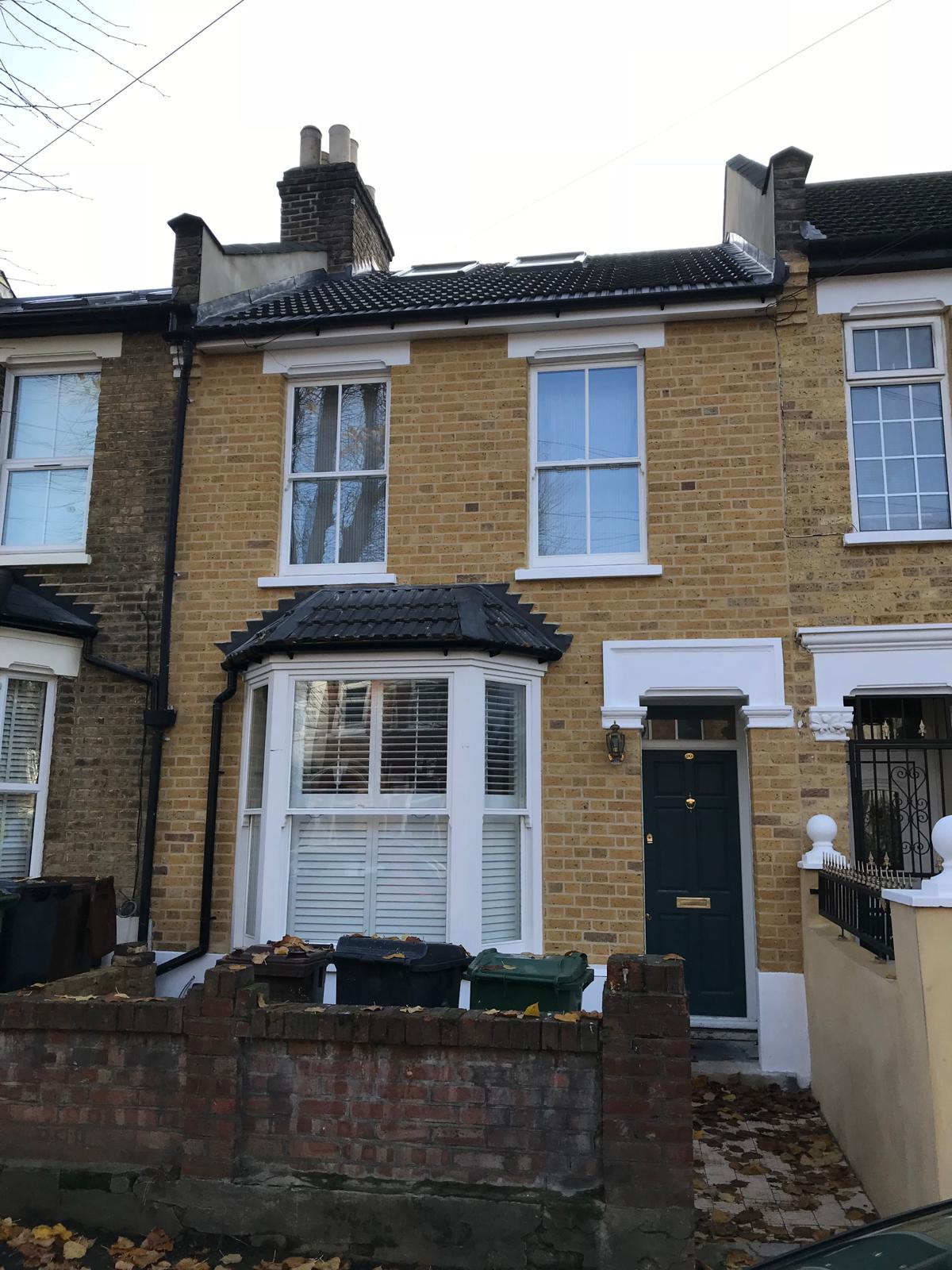
Joints raked out by hand and repointed in the right lime mix, so moisture leaves through the mortar instead of the brick face, and the wall stops shedding material every winter.
18 years on external walls · 10-year workmanship guarantee
- 18 years' experience
- £2m public liability insurance
- 10-year workmanship guarantee
- K Rend approved installer
- Listed on TrustATrader
What hydraulic lime repointing actually is
Repointing is the renewal of the mortar joints between bricks or stone. The bricks themselves usually outlast the mortar by decades, so when a solid wall starts looking tired, it is almost always the joints that have gone, not the masonry. Hydraulic lime repointing renews those joints using a natural hydraulic lime mortar rather than a modern cement mix.
The difference matters more than it sounds. Lime mortar is softer and more porous than the bricks around it, so it takes up movement and lets trapped moisture evaporate out through the joint. Cement does the opposite: it is harder than most Victorian and Georgian stock brick, so water is forced to leave through the brick face instead, which blows the face off over a few frost cycles.
We cut out the failed mortar by hand where the brick arrises are fragile, choose a lime designated to suit how exposed the elevation is, and finish the joint to match what the wall originally had: weatherstruck, bucket handle, flush or a fine ribbon on gauged work.
Who it is for and when it is needed
This is the right specification for solid-wall properties built before roughly 1919, for any wall that was originally built in lime, and for conservation-area homes in London and Kent where the appearance of the pointing is part of the street. We work on period and conservation-area properties. We do not take on listed buildings.
The usual triggers are mortar you can rake out with a screwdriver, joints that have receded behind the face of the brick, sandy dust collecting on the sills and path below, damp patches appearing inside on the windward elevation, or a previous cement repoint that is now cracking away from the brick in strips.
It also gets specified defensively: before a wall is re-decorated internally, before scaffolding comes down from a roof job while access is already paid for, and when a surveyor's report has flagged open joints as a source of water ingress on a purchase.
What happens if it is left
The cost of leaving it another winter
Open joints are not cosmetic. Every millimetre the mortar has receded is a shelf holding water against the wall, and a solid wall has no cavity to stop that water reaching the inside face. Left through a couple of wet winters, the visible result is damp staining internally, perished plaster at skirting level and salts crystallising on the wall.
The more expensive consequence is brick loss. Once water sits in the outer few millimetres of a soft stock brick and freezes, the face spalls off. Repointing a wall is a fraction of the cost of cutting out and replacing hundreds of spalled bricks, and replacement brick never quite matches the weathering of the originals.
There is a structural end to this too. Deep open joints reduce the bedding area carrying the load, and on parapets, chimney stacks and free-standing garden walls that is what leads to leaning, bulging and rebuilds.
Common mistakes we are called in to undo
- Repointing an old lime-built wall in sand and cement because it looks stronger, it traps water and destroys the brick face.
- Cutting joints out with an angle grinder on soft stock brick, which widens the joint and chews the brick edges permanently.
- Pointing over the old mortar rather than raking back to a sound depth, so the new work debonds within a year or two.
- Sealing the wall with a waterproofer instead of fixing the joints, which locks moisture inside the masonry.
Our process
How a hydraulic lime repointing job runs from first call to guarantee
Step 1
Inspection
We look at the elevation close up, check mortar hardness, joint depth, brick condition and exposure, and identify anything else feeding water into the wall: sills, copings, downpipes, defective flaunching.
Step 2
Diagnosis and specification
We decide the lime designation, sand and joint profile from what the wall is, how exposed it is and what the original pointing looked like. You get that in writing with a fixed price and a payment schedule spread across the project.
Step 3
Access and preparation
Scaffolding or tower access is arranged by us, the working area is protected, and joints are raked out to a depth of at least twice their width back to a sound bed before being dampened down.
Step 4
Repointing and finishing
Mortar is packed into the joint in layers, allowed to firm to the right point, then finished to the agreed profile and brushed back so the joint reads consistently across the whole elevation.
Step 5
Protection, verification and guarantee
New lime work is protected from sun, wind and frost while it cures, then we walk the elevation with you before access comes down. Completed work carries our 10-year workmanship guarantee.
What you get
The results this work is actually bought for
The wall dries out instead of holding water
Breathable joints give trapped moisture a route out, which is what stops internal damp patches returning on the exposed elevation.
Your original bricks survive
A mortar softer than the brick sacrifices itself first. That is the whole point, the joint takes the wear so the brick faces you cannot replace do not.
Decades of service life
Correctly specified and finished lime pointing is a long-cycle job, not a five-year patch, so the cost per year of protection is low.
Movement is absorbed, not cracked
Lime flexes with seasonal movement and settles fine cracks itself, rather than fracturing in hard lines like cement does.
The elevation reads as one wall
Matched sand, colour and joint profile mean repointed sections do not stand out as a patch against the rest of the façade.
One contractor, one accountability
We arrange the access, do the work and carry the guarantee. There is no argument between trades when something needs putting right.
In detail
Hydraulic lime repointing: materials, methods and where it applies
Materials: choosing the right lime and sand
Natural hydraulic lime is graded by strength: NHL 2, NHL 3.5 and NHL 5. Weaker, more sheltered solid walls and soft handmade brick generally want the lower designations; exposed chimney stacks, parapets, copings and sea-facing or high-level work need more. Going too strong is the common error and causes the same brick damage as cement.
The sand governs the colour and the texture as much as the lime does. We match the aggregate to the surviving original mortar so the new joint sits in the same tonal range once it has carbonated and dried, rather than reading bright and grey against a warm Victorian façade.
Methods and joint profiles
Raking out is done with hand tools and, where a joint is wide and consistent enough, a fine mechanical aid used carefully away from the brick arrises. Depth matters: a shallow scrape gives the new mortar nothing to key into and it will shell off. Joints are cut back to sound material, dust blown out and the surface dampened so the wall does not suck the water out of the fresh mix.
The finish depends on the property. Weatherstruck throws water clear and suits exposed elevations. Bucket handle gives a compacted, durable joint on general stock brickwork. Flush and fine ribbon work suits gauged brick and fine-jointed façades. We match the profile that the building was built with, because the wrong profile changes the whole character of an elevation even when the mortar is right.
Read moreShow less
Variations of the work
Full elevation repointing is the most common, it gives an even colour and a single weathering age across the wall. Partial or patch repointing is worthwhile where only one band of brickwork has failed, typically below a leaking gutter or above a sill, and where the rest of the joints are sound.
Lime repointing is frequently combined with brick replacement where faces have already spalled, with chimney stack work while access is up, and with re-bedding of copings and cills. Doing those together while scaffolding is standing is significantly cheaper than returning for each.
Residential and commercial work
On houses, the priorities are usually appearance, damp and protecting original brickwork, and the programme is arranged around people living in the property. On commercial and managed blocks, the drivers are the same but the paperwork is heavier: insurance, method statements, agreed working hours and access coordinated around occupants.
Either way the specification is written from the wall, not from a template. Across London and Kent, including Bexley, Bexleyheath, Sidcup, Dartford, Erith, Bromley and Orpington, we see very different exposure and brick types street to street, and that changes the mix.
Not sure this is the right specification for your wall? See all of our services, the areas we cover, or go back to the homepage.
FAQs
Hydraulic lime repointing questions we are asked most
How much does hydraulic lime repointing cost?
It is priced per elevation, because the cost is driven by area, access, joint depth and how much brick repair comes with it. We give you a written fixed price after looking at the wall, with the payment schedule spread across the project. Quotes are free and there is no obligation. Small jobs carry a minimum charge.
How long does a repointing job take?
A single elevation on a typical terrace or semi is usually a matter of days rather than weeks once access is up; a whole property is longer. We give you the programme in writing with the quote so you know how long scaffolding will be standing.
Can you match my existing mortar colour?
Yes. We match sand and lime to the surviving original mortar and the joint profile to what the building was built with, so the repointed area sits with the rest of the façade rather than standing out.
Is the work guaranteed?
Completed work carries a 10-year workmanship guarantee, and we hold £2 million public liability insurance. We are listed on TrustATrader.
How long should lime repointing last?
Correctly specified, well-compacted lime pointing on a sound wall is a long-cycle job measured in decades rather than years. Its life depends mostly on exposure and on whether rainwater goods and copings are keeping bulk water off the wall.
Should I use lime or cement mortar?
If the wall was built in lime, or the brick is soft stock, lime. Cement is harder than the brick and forces evaporation through the brick face, which is what causes spalling. On modern brickwork built in cement, a cement mix is appropriate.
Do you work in winter?
Lime needs protection from frost, so cold snaps affect scheduling and we protect fresh work while it cures. We will tell you honestly if the weather means a job is better placed in a different window rather than rushing it.
Do you work on listed buildings?
No. We work on period and conservation-area properties across London and Kent, but we do not take on listed buildings.
Do you handle scaffolding and access?
Yes, access and scaffolding are arranged by us as part of the job, and the cost is set out in the written quote rather than appearing later.
Which areas do you cover?
London and Kent, including Bexley, Bexleyheath, Sidcup, Dartford, Erith, Bromley and Orpington.
Related work
Often carried out alongside this
Brickwork repointing & repair
Raking out tired joints, replacing spalled bricks and repointing to a clean, consistent line.
Read moreChimney repointing
Stacks repointed, flaunching renewed and weathering details reinstated, with our own access arranged.
Read moreExterior damp specialists
We trace penetrating damp back to the failed pointing, render or detail causing it, then put the fabric right.
Read moreFree quote
Stop the wall shedding mortar every winter
Send a few details and a photo of the elevation. We will look at the wall, tell you what has failed and put a written price in front of you: free, with no obligation.
- 18 years' experience
- £2m public liability insurance
- 10-year workmanship guarantee
- K Rend approved installer
- Listed on TrustATrader